No products in the cart.
No products in the cart.

Rollator, walking frame, or walking stick? Compare features, benefits, and how to choose the right walking aid for your balance, distance, and mobility needs.
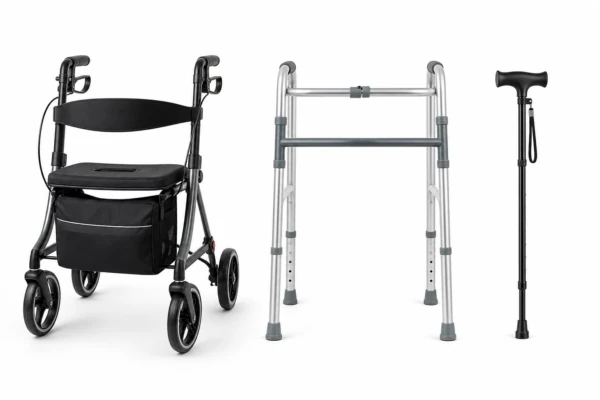
Choosing the right walking aid can feel overwhelming when you’re facing mobility challenges for the first time. Whether you’re recovering from surgery, managing a long-term condition, or simply noticing that walking has become harder, the right support makes all the difference between staying independent and feeling restricted.
The three most common walking aids—rollators, walking frames, and walking sticks—each solve different problems. A rollator offers continuous support with wheels and a seat, perfect for longer distances. A walking frame provides maximum stability with a lift-and-place pattern, ideal for home use. A walking stick offers light balance assistance when you only need occasional support.
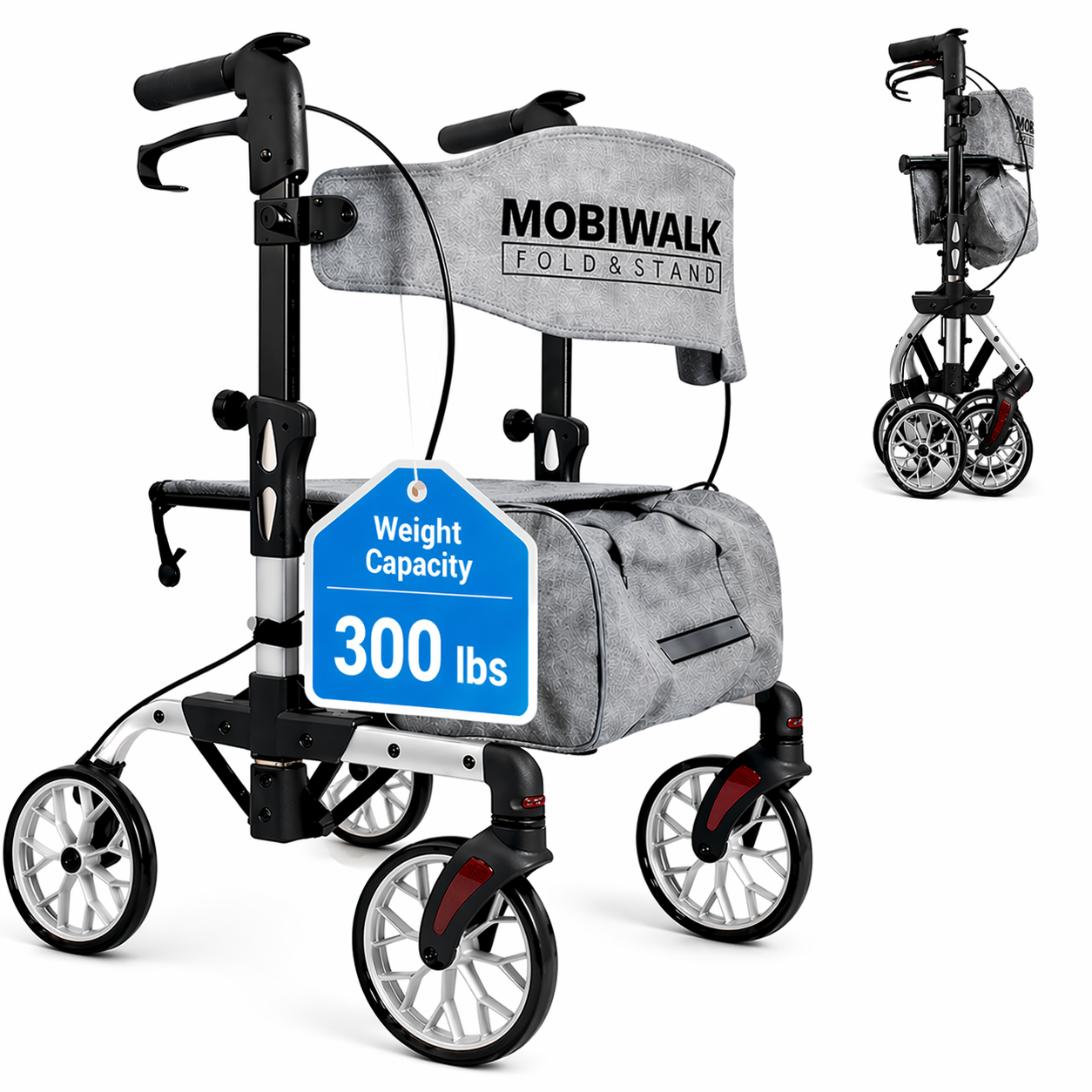
Rollator
Wheeled walker with seat
4 wheels, hand brakes, built-in seat and storage. Walk continuously at a natural pace. Best for longer distances and users who need frequent rests.
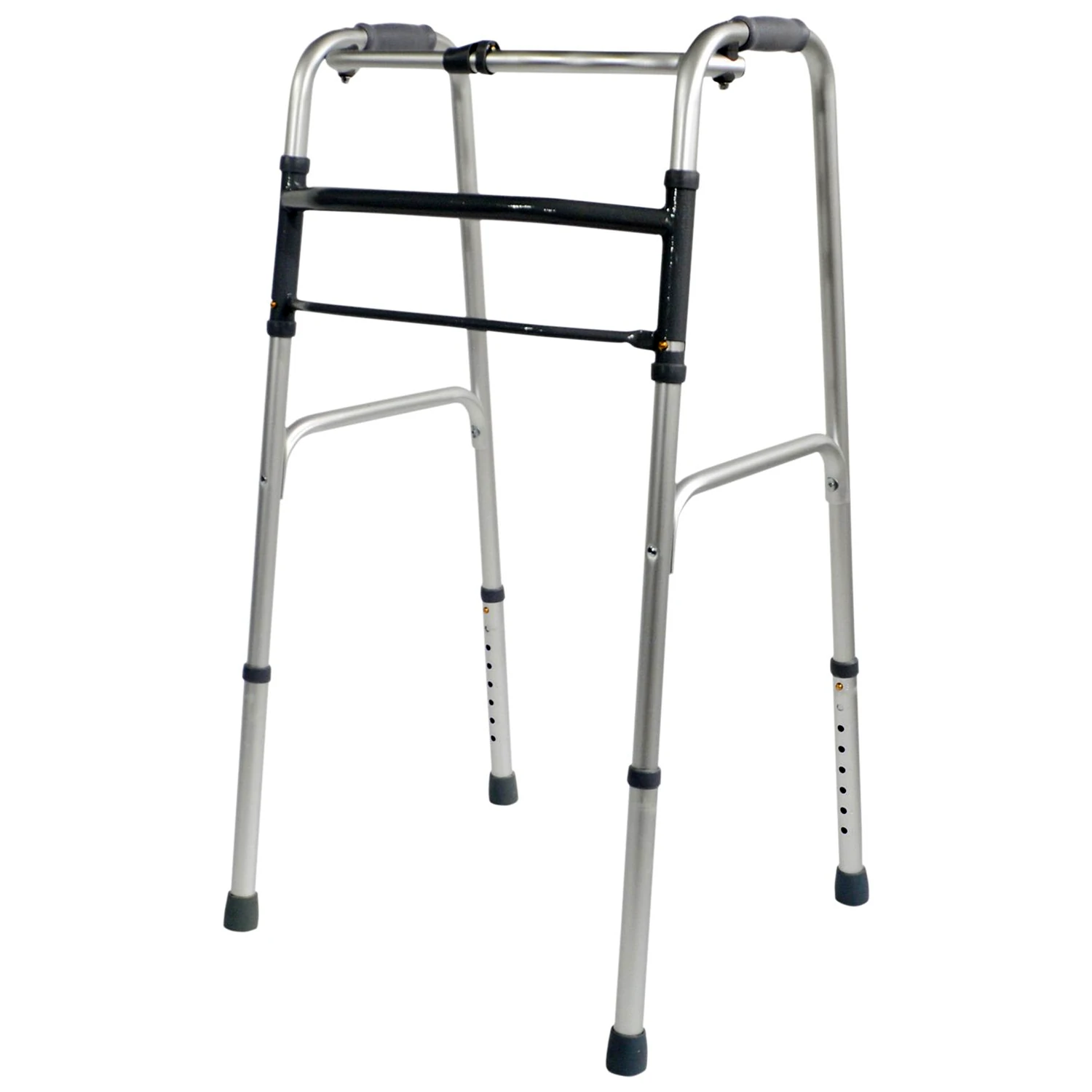
Walking Frame
Zimmer frame
Fixed or front-wheeled base, no seat, lift-and-place pattern. Maximum stability for severe balance issues. Best for home use and post-surgery recovery.
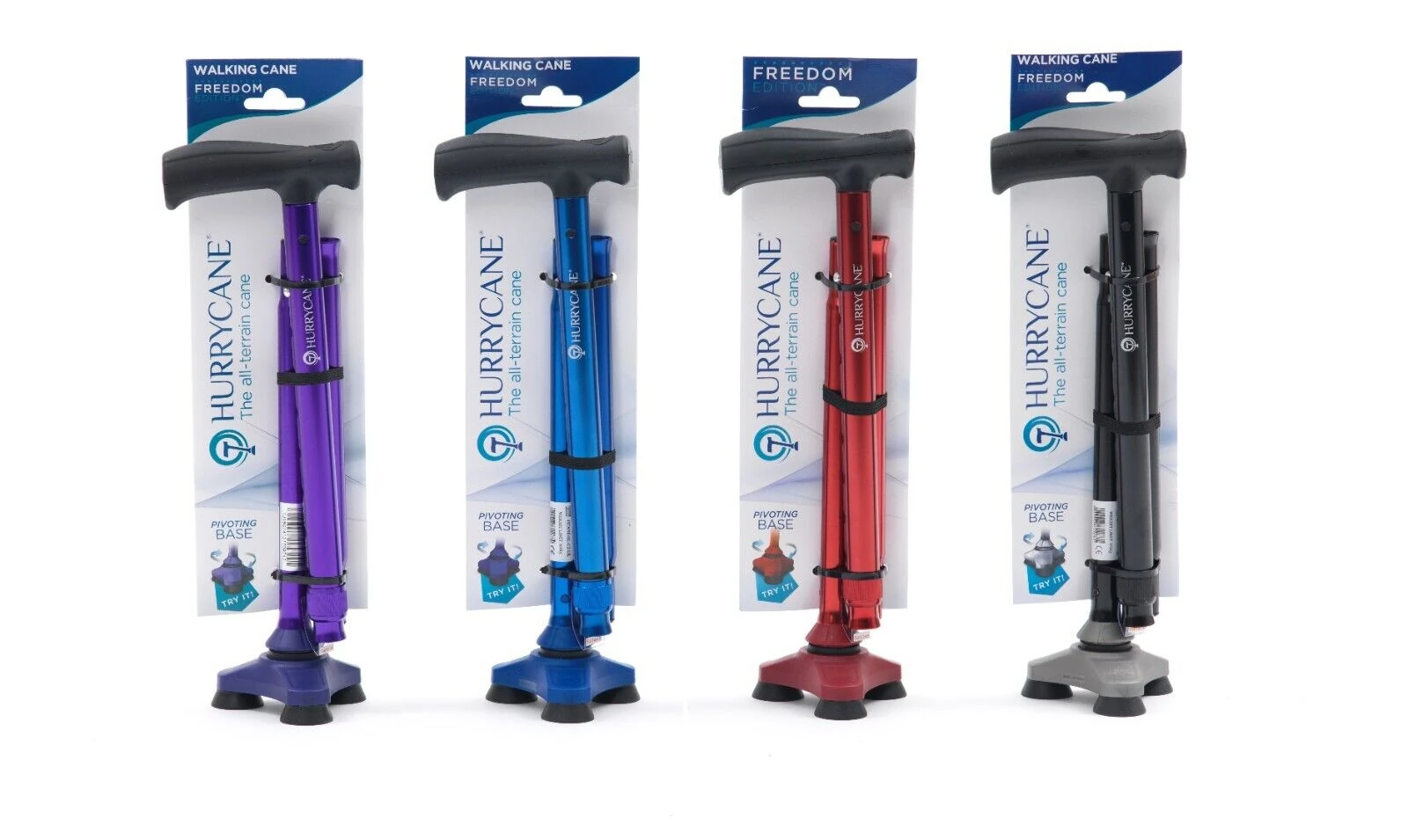
Walking Stick
Single-point cane
Lightweight one-handed support for minor balance issues. Portable and discreet. Best for occasional support and outdoor walking.
The key is matching the aid to your specific needs: balance ability, distance you walk, fatigue levels, and where you’ll use it most.
A rollator is a four-wheeled walker with hand brakes, a padded seat, and storage space. You push it ahead of you as you walk, rather than lifting it. The continuous wheeled support means you can walk at a natural pace without the stop-start rhythm of a zimmer frame.
Best for:
Rollators suit people who have mild to moderate balance issues but can still walk continuously. The wheels make them easy to manoeuvre, and the seat offers a rest point whenever fatigue sets in—no need to find a bench.
Budget rollators work well for indoor use and short outdoor trips. They typically have smaller wheels (6 inches) and basic features, but still provide the core benefits: four-wheel support, a seat, and storage.
Key rollator features to compare:
A walking frame—often called a zimmer frame—provides maximum stability through a fixed or lightly wheeled base that you lift and place ahead of you with each step. Unlike rollators, most frames have no seat and require you to pick up the frame between steps.
Best for:
Walking frames force a deliberate, controlled walking pattern. You lift the frame, place it ahead, step into it, repeat. This rhythm can feel slow, but it’s the safest option if your balance is significantly compromised.
Some frames have wheels on the front legs only, which reduces the lifting effort while maintaining rear stability. This hybrid style suits users who find fully fixed frames too tiring but aren’t ready for a rollator.
Frame vs rollator: the trade-off

A walking stick (or cane) provides one-handed support for minor balance issues. You hold it in your stronger hand and use it to steady yourself, not to bear significant weight.
Best for:
Walking sticks are the least intrusive aid—they slip into a bag, lean against a wall, and don’t announce "mobility device" the way a rollator does. But they only work if your balance and strength are mostly intact. If you’re leaning heavily on a stick or using it to push yourself up from chairs, you likely need a frame or rollator instead.
Stick features that matter:
The right aid depends on your balance, strength, walking distance, and environment. Work through this checklist to narrow your options:
Red flags that mean you need more support:
If any of these apply, start with a walking frame or rollator rather than a stick. You can always step down to a lighter aid as your strength improves.
Can you use more than one aid? Yes. Many people keep a walking frame at home for safety on stairs and use a rollator for outdoor trips. Or they use a stick for short errands and a rollator for longer outings. Your needs will change depending on fatigue, terrain, and how far you’re going.
Not at the same time—you need both hands free to control a walking frame safely. But many people keep both: a frame for home use where stability is critical, and a stick for quick outdoor trips where portability matters more.
No. Walking aids are available to buy directly without a prescription. However, if you're recovering from surgery or have a diagnosed condition, your physiotherapist or occupational therapist can assess you and recommend the most suitable type.
Yes, but wheel size matters. Rollators with 8-inch or larger wheels handle pavements, grass, and gravel paths. Smaller 6-inch wheels are fine for indoor and smooth outdoor surfaces but struggle on uneven terrain.
Warning signs: you've had a fall or near-miss in the past 6 months; you avoid activities because you're afraid of falling; you hold onto furniture to move around your home; you feel less confident walking than you did a year ago. If any apply, speak to your GP or request a falls-risk assessment.
Walking aids are VAT exempt in the UK if you have a long-term illness or disability (you declare this at checkout—no proof required). NHS provision varies by area; some CCGs provide walking aids free via community equipment services, others expect you to buy your own. Check with your local Integrated Care Board. Private insurance rarely covers standard walking aids unless specified in your policy.
Start with the aid that matches your current needs, not the one you hope to progress to. It's safer to use a rollator when you need one and step down to a stick later than to struggle with a stick and risk a fall. Most people's needs change over time—buying a different aid as your mobility improves or declines is normal.
Final thought: The "right" walking aid is the one you’ll actually use. If a zimmer frame feels too medical and you avoid using it, a rollator that you take out daily is the better choice—even if the frame offers fractionally more stability on paper. Independence comes from confidence, and confidence comes from having support you trust.
Free Download
Living with chronic pain can feel overwhelming, but small, consistent changes can significantly improve your quality of life.
Your information is safe with us. We'll never share your details.